
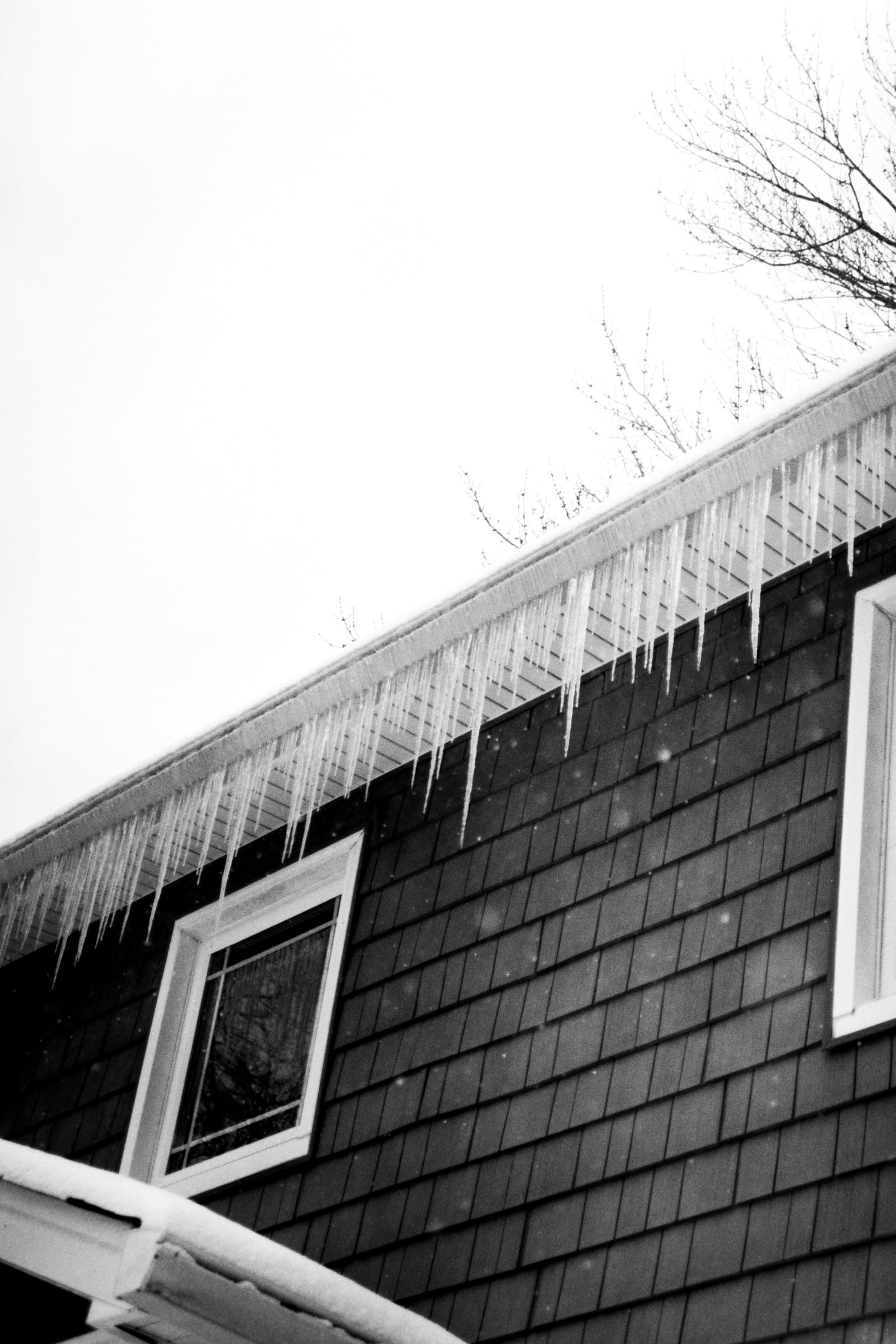
Every Minnesota winter, homeowners discover water stains on their ceilings, dripping walls, or soaked insulation, and the cause is often the same: an ice dam. Understanding how ice dams form is the first step to preventing the damage they cause.
What Is an Ice Dam?
An ice dam is a ridge of ice that builds up along the lower edge of your roof. It blocks melting snow from draining off, so the water pools behind the ridge. With nowhere to go, that water can back up under your shingles and leak into your attic, walls, and ceilings.
What Causes Ice Dams?
Ice dams form when different parts of your roof sit at different temperatures. The process usually looks like this:
- Heat escapes from your living space into the attic and warms the upper part of the roof deck.
- Snow on the warm section of the roof melts, and the water runs down toward the eaves.
- The eaves hang past the heated part of the house and stay at or below freezing, so the water refreezes there.
- Over days and weeks, the frozen edge grows into a dam, and more meltwater backs up behind it.
The root problem is almost always heat loss into the attic, combined with poor ventilation and insufficient insulation. Snow and cold weather are only the trigger.
Warning Signs of Ice Dams
- Thick ridges of ice along the eaves or gutters
- Large icicles hanging from the roof edge
- Water stains on ceilings or along exterior walls
- Peeling paint or damp insulation near the top of walls
- Ice forming in unusual patterns at the eaves or under the gutters
How to Prevent Ice Dams
Prevention is far less expensive than repair, and most of it happens before winter starts.
- Seal air leaks. Gaps around attic hatches, recessed lights, and plumbing or wiring penetrations let warm air into the attic.
- Add or upgrade attic insulation. Better insulation keeps heat in the living space and the roof deck cold and even.
- Improve ventilation. Clear soffit vents and a working ridge vent keep cold air moving under the roof deck.
- Keep gutters clear. Clogged gutters trap water that freezes and adds to the dam.
- Install ice and water shield. When a roof is replaced, a waterproof membrane along the eaves adds a backup layer of protection if water does back up.
What to Do If You Already Have One
Avoid chipping at ice with hammers or shovels, since that can damage shingles and cause injuries. Clearing snow from the lower few feet of the roof with a roof rake, from the ground, can reduce the water supply feeding the dam. For active leaks or large buildups, it’s best to call a professional who can safely remove the ice and assess any damage underneath.
Ice dam damage can also be a covered loss in some situations, depending on your policy. If you’ve already seen water damage inside your home, it’s worth documenting it right away.
If you’re in the Blaine area and want a professional to look at your roof and attic before winter, contact our roofing team to schedule a free inspection.
]]>